How to Optimize Robotic Machining for Enhanced Precision and Efficiency?
In the world of advanced manufacturing, "Robotic Machining" is becoming a crucial component. Experts in this field stress the importance of refining processes. One such expert, Dr. Emily Tran, emphasizes, “Precision in robotic machining can transform production landscapes.” Her insight underscores the need for optimized techniques.
Enhancing precision and efficiency in robotic machining is no easy task. It requires a deep understanding of both technology and workflow. Many companies struggle to maintain consistency and quality. These challenges can lead to wasted materials and increased costs. It's vital to address these issues head-on.
To achieve optimal results, businesses must consider various factors. This includes software integration, tool wear, and motion dynamics. Each element plays a role in overall performance. Continuous improvement is key. Reflecting on past shortcomings can pave the way for better strategies. Ultimately, success in this domain relies on blending innovation with meticulous attention to detail.

Understanding the Fundamentals of Robotic Machining Technology
Robotic machining technology has transformed manufacturing. This technology enhances precision in complex shapes, using advanced algorithms. Studies show that robotic machining can improve accuracy by 30% compared to traditional methods. However, challenges remain. Calibration errors can lead to significant inconsistencies in machining tasks.
Understanding the fundamentals is crucial. Robots must be programmed correctly for optimal performance. A recent report indicated that improper programming could account for up to 20% of machining errors. While robots can work tirelessly, they are not infallible. Maintenance is also essential. Downtime due to neglect can offset any gains in efficiency.
Furthermore, choosing the right tools is vital. The wrong tool can directly affect machining quality. According to industry experts, nearly 15% of effort is wasted due to suboptimal tool selection. This aspect asks for critical reflection on operational practices. The balance between human oversight and automation needs reevaluation for better results.
Key Factors Affecting Precision in Robotic Machining Processes
Precision in robotic machining is influenced by various factors. These factors include machine calibration, tool wear, and environmental conditions. A recent industry report states that misalignment can lead to a precision loss of up to 0.5 mm. This seemingly small deviation can significantly impact product quality. Regular calibration is essential, yet many companies neglect this critical step.
Tool wear also plays a crucial role in maintaining precision. According to data, worn tools can reduce machining accuracy by over 10%. Many operators might choose to extend tool life rather than replace it. This decision could lead to increased costs and compromised performance. Monitoring the condition of the tools in real-time can help mitigate these risks.
Environmental conditions are often overlooked but are equally important. Temperature fluctuations can cause material expansion, affecting machining precision. Research indicates that a temperature variation of just 2°C can lead to dimensional changes of up to 0.02 mm in some materials. Companies must consider these factors seriously to enhance overall efficiency. Continuous evaluation and adaptation are key to mastering the intricacies of robotic machining.
Enhancing Efficiency Through Advanced Sensor Integration
Advanced sensor integration is transforming robotic machining. Sensors improve precision and efficiency in manufacturing. By collecting real-time data, they allow machines to adjust operations automatically. This leads to fewer errors and reduced waste, enhancing overall productivity.
Research shows that integrating advanced sensors can increase machining efficiency by up to 30%. This relies on critical factors like sensor type and placement. Proximity sensors, for instance, ensure that tools maintain proper distance from materials. Such adjustments lead to more consistent finishes and tighter tolerances.
**Tip:** Choose the right sensors based on specific machining needs. Not every sensor suits every task.
Another consideration is the training of personnel. Employees must understand new technologies. Untrained staff may misinterpret sensor data, leading to inefficiencies. Regular training sessions can bridge this gap.
**Tip:** Invest in ongoing education for your team. Knowledgeable staff can leverage technology fully.
Robotic machining is indeed powerful. However, improper integration can result in overlooked issues. Regular assessments of sensor performance are crucial. This practice helps identify unexpected challenges early.
Optimization of Robotic Machining Efficiency
Implementing Real-Time Monitoring and Feedback Systems
Implementing real-time monitoring and feedback systems in robotic machining can transform precision and efficiency. Such systems collect data continuously, allowing for immediate adjustments. These adjustments can correct tool paths or detect wear in real time. It’s critical to maintain a tight loop of data collection and analysis. This agility ensures that robotics can react to unexpected changes, improving overall outcomes.
However, challenges remain. Integration of sensors adds complexity to the setup. It requires thorough planning and design, which can sometimes lead to inefficiencies. Debugging can be time-consuming, as false readings may cause unnecessary adjustments. Operators need training to interpret data effectively. Too often, valuable insights get lost in noise. This reality highlights the importance of fine-tuning these systems.
Despite these hurdles, the benefits often outweigh the difficulties. Enhanced precision leads to higher quality products. Efficiency gains can reduce operational costs significantly. Monitoring systems can identify patterns over time, aiding in long-term improvements. Nevertheless, the reality of implementation means that manufacturers must tread carefully, balancing innovation with practical execution. This journey requires constant reflection and iteration to truly optimize robotic machining processes.
How to Optimize Robotic Machining for Enhanced Precision and Efficiency?
| Parameter |
Value |
Measurement Unit |
Importance Level |
| Machining Speed |
2000 |
RPM |
High |
| Feed Rate |
150 |
mm/min |
Medium |
| Tool Wear |
0.05 |
mm |
High |
| Surface Finish |
Ra 0.8 |
µm |
High |
| Power Consumption |
5 |
kW |
Medium |
| Cycle Time |
45 |
sec |
High |
Strategies for Continuous Improvement in Robotic Machining Operations
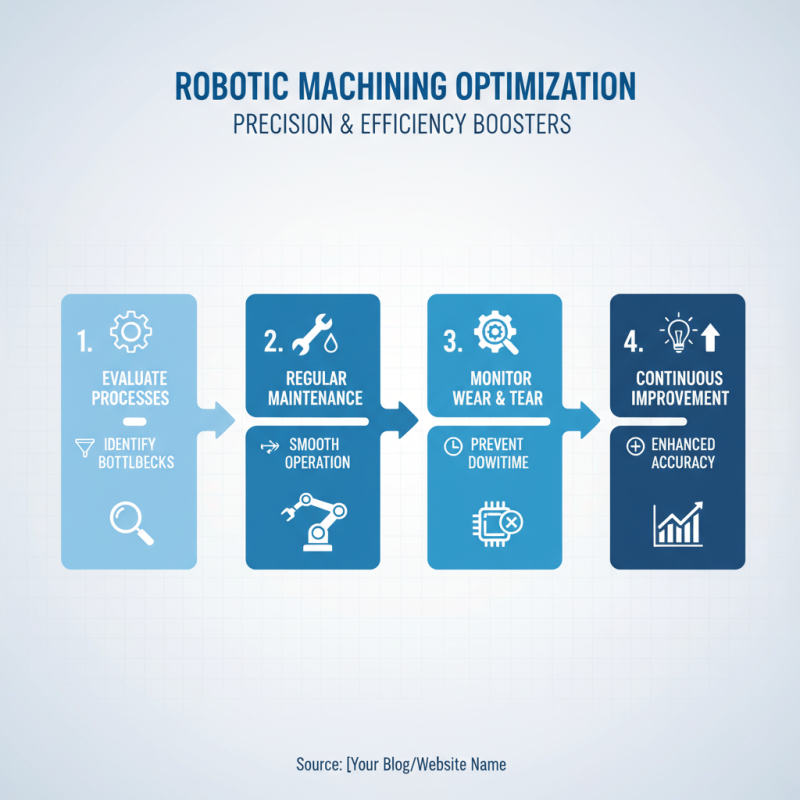
In robotic machining, precision and efficiency can always be improved. Key strategies involve regular evaluations of current processes. Start by identifying bottlenecks in your workflow. Regular maintenance of robotic arms is critical. It ensures that machines operate smoothly. Monitor wear and tear closely to prevent downtimes.
Tips: Track your machine's performance data. Look for patterns that suggest inefficiencies. You might discover unexpected issues. Consider employee feedback. Workers can provide insights that data alone might miss. Implement new tools when necessary. Don't hesitate to upgrade software or hardware.
Continuous improvement means embracing change. Set small, achievable goals for your team. Even minor adjustments can lead to major gains. Review progress frequently. Celebrate small victories to keep morale high. However, acknowledge when strategies fail. Reflect on what didn’t work and why. This analysis can be a valuable teacher. Each attempt, successful or not, has merits worth considering.