China has become a major sourcing hub for Robot Motors, serving automation, logistics, medical equipment, and industrial machinery markets worldwide. Its manufacturers range from large, export-focused groups to specialized factories producing compact servo, stepper, BLDC, and geared motors. This article introduces ten notable Chinese manufacturers for global buyers seeking dependable motion solutions.
The selection considers practical factors, including torque range, speed stability, encoder options, voltage compatibility, production capacity, and technical support. Documentation matters. A clear datasheet, test report, and traceable quality process can reduce costly surprises after delivery. Buyers should also examine sample performance, winding quality, noise levels, connector design, and thermal behavior under continuous loads.
Real sourcing is rarely perfect. Product pages may look impressive, yet response times can vary during peak seasons. A promising factory may still need closer verification. This guide therefore encourages buyers to compare specifications, request samples, review certifications, and assess factory communication before signing a contract. Lead time, packaging, warranty handling, and spare-part availability deserve equal attention.
The featured companies are evaluated from an international purchasing perspective. Their suitability may differ by application, budget, and required compliance standards. Some excel in customized drives, while others focus on standardized models and faster delivery. No ranking can replace an engineering review or an on-site audit. Still, this overview offers a practical starting point for identifying reliable Chinese Robot Motors partners and narrowing a complex global supplier search.
Robot Motor Types and Selection Criteria for Global Applications
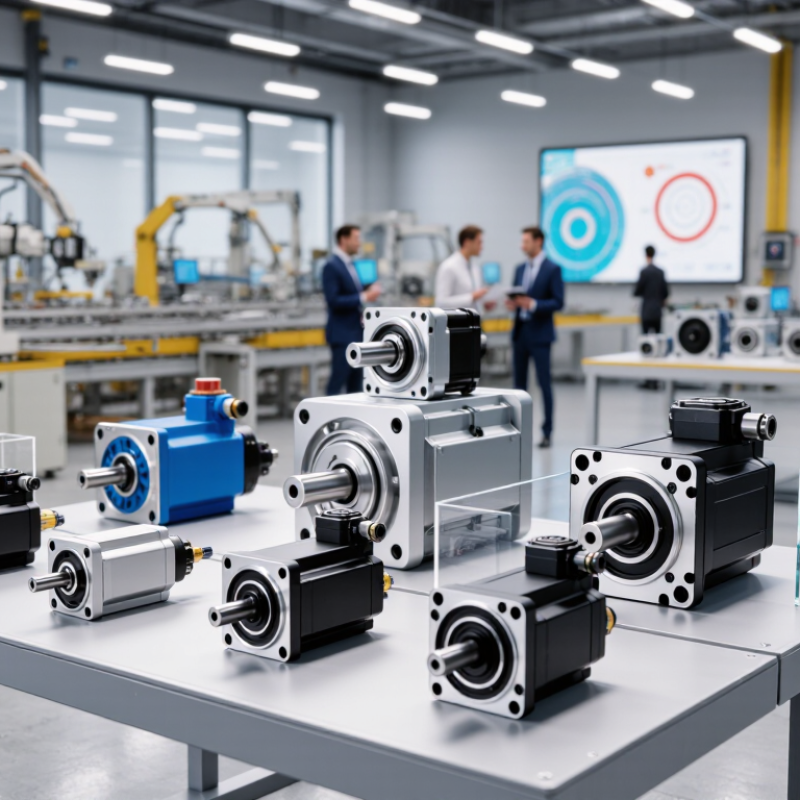
Choosing a robot motor starts with motion, not marketing. Brushed DC motors suit simple, cost-sensitive mechanisms with moderate duty cycles. Brushless DC motors offer longer service life and quieter operation. Stepper motors provide predictable positioning, but they may lose steps under sudden loads. Servo motors combine feedback, speed control, and accurate torque management. Geared motors add output torque, although backlash and efficiency losses require attention.
In field evaluations, torque-speed curves reveal more than a catalog headline. Check continuous torque, peak torque, acceleration, duty cycle, voltage, and thermal limits. A motor that performs well on a test bench may overheat inside a compact joint. Encoder resolution affects repeatability, while gearbox backlash influences end-effector precision. Also review connector standards, control interfaces, ingress protection, documentation, and spare-part availability across target markets. A neat spreadsheet can still mislead.
Tips: Test the motor under the real payload, not an ideal load. Measure temperature after repeated cycles. Leave safety margin for friction and unexpected resistance. Ask for sample data, inspection records, and lifecycle results. Do not ignore noise; operators notice it quickly. For mobile robots, compare weight against battery demand. For articulated arms, prioritize torque density and feedback quality. Selection is rarely perfect on the first pass. Recheck assumptions after prototype testing.
Representative operating-speed and efficiency benchmarks for commonly used industrial robot motor technologies.
BLDC and PMSM motors are generally preferred for high-speed, compact robot joints, while servo motors provide precise closed-loop positioning and torque control. AC induction motors are robust for larger industrial systems, and stepper motors are suitable for cost-sensitive applications with moderate speed and positioning demands. Final selection should consider rated torque, peak torque, speed range, duty cycle, encoder resolution, thermal performance, gearbox compatibility, supply voltage, protection rating, and total cost of ownership. Values shown are representative engineering ranges and may vary by motor size, controller, load, and operating conditions.
Choosing the top 10 robot motor manufacturers requires more than checking sales figures. Global buyers should examine torque stability, speed control, thermal performance, and encoder accuracy. A motor may run smoothly in a showroom but fail under dust, vibration, or repeated acceleration.
Evaluation should include real operating tests. Engineers can measure temperature after eight hours, noise during rapid direction changes, and positioning drift under changing loads. Product documentation also matters. Clear curves, tolerance data, wiring details, and maintenance guidance show stronger technical discipline. Manufacturing experience is useful, but recent quality records deserve equal attention. A famous supplier can still have inconsistent batches. That possibility should not be ignored.
Tips: Request sample motors and test them with your actual gearbox, controller, and duty cycle. Check overload protection, expected service life, spare-part access, and response time from technical support. Ask for traceable quality records and relevant safety certifications. Do not judge only by unit price. Energy use, installation time, and failure recovery can change the total cost. In my experience, communication quality often predicts project reliability, although this is not a perfect rule. A supplier that answers difficult questions clearly may be more dependable than one offering impressive specifications. Evaluation should remain practical, documented, and open to revision as field data arrives.
China’s robot motor sector has expanded with factory automation. The International Federation of Robotics reported 276,288 industrial robot installations in China during 2023. That represented about 51% of global installations. Behind this growth are specialized manufacturers producing servo motors, stepper motors, frameless torque motors, and integrated drive systems.
Leading suppliers often serve different robot applications. One group focuses on compact servo motors for pick-and-place arms. Another develops high-torque motors for joint modules and collaborative robots. Several manufacturers provide magnetic encoders, planetary gearboxes, and customized windings. Their factories commonly use automated winding machines, balancing equipment, and load-testing benches. These details matter. Motor consistency affects positioning accuracy, heat control, and maintenance costs.
Quality evidence should guide buyer selection. ISO 9001 certification, traceable batch records, and endurance-test data offer useful verification. The China Robot Industry Alliance has reported continued growth in domestic robot production, increasing demand for reliable motion components. Still, supplier profiles can look stronger than actual performance. Some catalogs provide limited thermal data or unclear efficiency curves. Buyers should request samples, test motors under real duty cycles, and compare noise, backlash, and temperature rise. Specifications can be incomplete. That deserves careful review.
Comparing Performance, Costs, Certifications, and Export Capabilities
When comparing China’s top ten robot motor manufacturers, performance should be measured beyond rated power. Check continuous torque, peak torque, speed stability, encoder resolution, noise, and thermal rise. A motor running beside a welding cell may face dust, vibration, and sudden load changes. Ask for test curves under realistic duty cycles. Laboratory results alone can mislead.
Costs vary with winding design, magnets, gearbox matching, feedback systems, and order volume. A low unit price may exclude controllers, custom shafts, tooling, or inspection fees. Request a complete landed-cost calculation, including packaging and spare units. Samples matter.
Certification evidence also needs careful review. Verify current ISO 9001 records, CE or other market-required declarations, RoHS documentation, and product-level test reports. Certification scope should match the actual motor model. Some documents look acceptable but lack traceable issue dates. That is a warning sign.
Export capability can determine project reliability. Experienced suppliers usually provide English datasheets, commercial invoices, packing lists, HS-code support, and clear Incoterms. Confirm export packaging, lead times, warranty handling, and replacement procedures before payment. Ask whether they have shipped similar motor types to your destination market. Port delays happen. Even strong suppliers may provide inconsistent torque data between batches, so an independent pre-shipment inspection can protect the final integration. Personally, I would not choose the cheapest quotation without reviewing ten sample units and their measured deviations.
Choosing a Chinese robot motor supplier requires more than comparing unit prices. Start with the robot’s actual workload: continuous torque, peak torque, speed range, duty cycle, noise limits, and installation space. Ask for measured torque-speed curves, encoder resolution, winding data, and thermal test results. A catalog number alone is not enough.
Request samples from the same production line used for volume orders. Test them under repeated acceleration, stopping, and heat conditions. Check gearbox backlash, connector quality, cable flexibility, and bearing noise after extended operation.
Confirm whether the supplier controls key processes internally or relies on several subcontractors. Factory visits, process records, and batch traceability can reveal gaps that polished presentations hide. Request applicable quality and safety documentation, then verify its scope and validity.
Communication is also a technical factor. The supplier should explain tolerances clearly and respond with drawings, test data, and corrective actions. Discuss lead times, spare parts, packaging, warranty handling, and engineering support before signing an agreement.
My own mistake was trusting a successful sample too quickly; later, production variation caused alignment problems. A second validation round would have exposed it earlier. Leave room for that reality. A supplier with honest limitations may be safer than one promising everything. Compare total operating cost, not only the purchase price, and document every agreed specification.