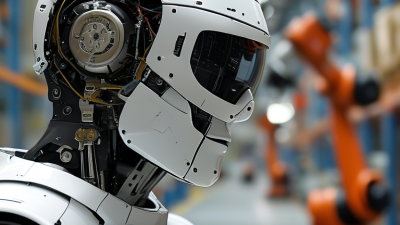
China has become a central force in the global industrial robotics market. According to the International Federation of Robotics’ World Robotics 2024 report, Chinese factories installed 276,288 industrial robots in 2023. That represented 51% of global installations. China’s operational robot stock also exceeded 1.7 million units.
These figures show scale. They do not automatically prove quality. Global buyers need more than attractive pricing and impressive production videos. They must examine repeatability, payload stability, cycle-time performance, controller reliability, and after-sales response. Precise Robotics should be evaluated through measurable evidence, not marketing language alone.
This guide introduces leading Chinese Precise Robotics manufacturers serving international buyers. It considers robotic arms, machine-tending systems, welding platforms, assembly solutions, and integrated automation cells. Supplier selection should also consider ISO 10218 safety principles, documented testing procedures, spare-parts availability, and software compatibility.
Small details matter. A loose cable can stop a production line. A delayed replacement part can affect an entire shift. Manufacturers with export experience usually understand documentation, installation training, and local compliance requirements more clearly. However, supplier capability can vary between product lines and facilities. That distinction is easy to miss.
The ranking should therefore be treated as a practical starting point, not a final verdict. Buyers should request factory audits, application samples, reference projects, and transparent performance data. Technology changes quickly. Some established manufacturers still need stronger international service networks, while newer companies may offer impressive engineering with limited field history. Careful verification remains essential.

Precision robotics manufacturing is defined by controlled variation, not impressive specifications alone. A capable factory begins with application details: payload, repeatability, cycle time, workspace, and environmental exposure. Engineers translate these requirements into tolerances, material choices, and test procedures. They also check whether the design can be assembled consistently. Small errors accumulate. A misplaced bearing seat can affect an entire motion axis.
In practice, precision depends on process discipline. CNC machining requires verified tooling, stable temperature control, and documented inspection points. Assembly teams need torque records, alignment fixtures, and clean work areas. Coordinate measuring machines can verify critical dimensions, while laser or vision systems assess movement and positioning. Calibration records should be traceable to recognized measurement standards. Reliable suppliers share inspection reports, change-control records, and serial-level data. This evidence matters more than polished sales language.
Experience also appears during failure analysis. Engineers should examine vibration, cable routing, software limits, lubrication, and operator habits. A prototype may pass a factory test yet struggle after months of dust and repeated loading. No factory gets every first sample right. That is the uncomfortable part. Strong manufacturers document defects, identify causes, and adjust processes instead of hiding problems. Global buyers should request sample validation, endurance testing, spare-part plans, and clear acceptance criteria. Precision is measurable, but dependable performance requires continuous verification.
China’s precision robotics sector covers articulated robots, SCARA systems, delta robots, collaborative arms, AGVs, and machine-vision platforms. The International Federation of Robotics reported 541,302 industrial robot installations worldwide in 2023. China represented more than half of that annual demand, creating deep manufacturing experience and a broad component supply chain.
Core capabilities include sub-millimeter repeatability, high-speed motion control, force sensing, vision calibration, and multi-axis synchronization. Precision manufacturers commonly provide servo drives, harmonic reducers, control cabinets, grippers, and application software.
In electronics assembly, a SCARA robot may place tiny components within tight cycle-time limits. In packaging, delta systems combine rapid picking with camera-guided sorting. Collaborative arms add flexible deployment, but their payload and speed remain practical constraints.
The difficult part is repeatability in real factories. Dust, vibration, temperature changes, and poorly tuned fixtures can reduce advertised accuracy. Buyers should request test reports, cycle-time records, calibration methods, and sample acceptance data. IFR’s World Robotics 2024 report also recorded about 4.28 million industrial robots operating globally in 2023, showing the importance of long-term maintenance. Factory visits and pilot testing still matter. A polished datasheet is not enough.
Suppliers with transparent tolerances, documented safety processes, spare-parts planning, and local technical support offer stronger reliability for global projects.
Chinese precision robotics manufacturers serve demanding industries with strong engineering depth and practical factory experience. Their teams often combine mechanical design, motion control, machine vision, and industrial software. Many facilities use CNC machining, clean assembly areas, and multi-stage calibration. A production record should show repeatability data, inspection methods, and documented operator training.
Leading manufacturers typically support articulated robots, SCARA systems, delta robots, and customized automation cells. They can adapt grippers, sensors, safety controls, and communication interfaces to a buyer’s process. During evaluation, global buyers should request sample testing with real workpieces. A small trial can reveal positioning drift, cycle-time changes, and maintenance access problems. These details matter more than attractive specifications.
Reliable suppliers communicate clearly about tolerances, delivery stages, spare parts, and service response. They should provide factory acceptance procedures and traceable quality records. Some manufacturers still need to improve technical English and after-sales coordination. That weakness deserves honest discussion. It can create delays when installation teams work across time zones. Buyers may also inspect welding quality, cable routing, emergency-stop placement, and software update practices. Good engineering is visible in these ordinary details. Not every custom request is wise. A capable manufacturer should explain when a simpler design offers better stability and lower operating risk.
| Data Dimension | Industry Data or Buyer Benchmark | Typical Application Relevance | Recommended Verification Method | Reference / Data Basis |
|---|---|---|---|---|
| Global Manufacturing Position | China accounted for approximately 51% of global industrial robot installations in 2023. | Indicates a large domestic ecosystem for robot manufacturing, component sourcing, system integration, and after-sales support. | Compare supplier production capacity, export experience, service locations, and spare-parts availability. | International Federation of Robotics, World Robotics 2024 |
| Annual Robot Installations | Approximately 276,288 industrial robots were installed in China in 2023. | Reflects the scale of demand from automotive, electronics, metalworking, logistics, and general manufacturing. | Request audited production figures or independently verifiable shipment records rather than relying only on marketing claims. | International Federation of Robotics, World Robotics 2024 |
| Robot Density | China reached approximately 470 industrial robots per 10,000 manufacturing employees in 2023. | Shows the maturity of industrial automation adoption and the availability of application know-how. | Assess whether the supplier has completed projects in the buyer’s specific industry and process. | International Federation of Robotics, World Robotics 2024 |
| Repeatability | Precision assembly and handling systems commonly specify repeatability from approximately ±0.01 mm to ±0.05 mm, depending on robot type and payload. | Important for electronics assembly, dispensing, inspection, screwdriving, and precise pick-and-place operations. | Require test results using ISO 9283 or GB/T 12642 methods under the actual payload and operating conditions. | Typical industry specification range; verify against the supplier’s measured test report. |
| Positioning Accuracy | Typical precision robot applications may require positioning accuracy in the approximate range of ±0.02 mm to ±0.10 mm. | Determines whether the robot can achieve the required absolute position without extensive external calibration. | Request accuracy data at multiple working points, speeds, payloads, and temperatures. | Application benchmark based on common precision automation requirements. |
| Payload Range | Compact precision robots are commonly selected in payload classes from approximately 3 kg to 20 kg. | Suitable for small-part assembly, machine tending, packaging, inspection, and light material handling. | Check payload at the specified reach, wrist inertia, acceleration, and tool center of gravity. | Common selection range for compact articulated, SCARA, and delta robot applications. |
| Cycle-Time Capability | High-speed small-part pick-and-place systems may achieve approximately 0.3–0.8 seconds per cycle, depending on motion distance and payload. | Relevant to electronics, consumer goods, packaging, sorting, and high-volume assembly. | Conduct a witnessed cycle-time test using the buyer’s product, tooling, path, safety limits, and required end-of-arm equipment. | Typical application benchmark; actual performance depends on the complete cell design. |
| Environmental Protection | Common industrial robot protection levels include IP54 for general factory use and IP65 or higher for dust- or splash-intensive areas. | Supports selection for machining, food-related packaging, clean production, and harsh manufacturing environments. | Verify the IP rating for the complete robot and wrist, not only for the controller or selected housing components. | IEC 60529 ingress-protection classification |
| Control and Communication | Industrial automation projects commonly require Ethernet-based communication, digital I/O, safety I/O, and fieldbus integration. | Enables connection with PLCs, vision systems, conveyors, MES platforms, safety devices, and production databases. | Request the supported protocol list, interface manuals, sample programs, and compatibility test records. | Buyer requirement benchmark; protocol availability varies by controller configuration. |
| Functional Safety | Industrial robot cells should be designed with risk assessment, emergency stopping, protective guarding, and safety-related control functions. | Reduces operational risk and supports compliance in export markets. | Review risk-assessment documents, safety circuit diagrams, validation records, and applicable conformity documentation. | ISO 10218-1, ISO 10218-2, ISO 12100, and ISO 13849-1 |
| Performance Testing | Robot accuracy, repeatability, path performance, and stabilization behavior should be tested under defined operating conditions. | Creates an objective basis for comparing precision robotics suppliers without relying on brand reputation. | Use a standardized factory acceptance test with agreed payload, speed, temperature, position, and measurement equipment. | ISO 9283 and GB/T 12642 |
| Quality Management | ISO 9001 certification is a common baseline for evaluating documented quality-management processes. | Helps buyers assess design control, incoming inspection, production traceability, corrective action, and customer complaint handling. | Verify certificate scope, validity, issuing body, production site, and whether the certificate covers robotics manufacturing. | ISO 9001:2015 |
| Export Documentation | International projects generally require technical manuals, electrical drawings, spare-parts lists, packing documentation, and conformity records. | Reduces installation delays and supports customs clearance, commissioning, maintenance, and local compliance. | Request a documentation sample before purchase and confirm the delivery language, revision control, and update procedure. | Common global procurement and commissioning requirement |
| Factory Acceptance Test | A documented FAT should include motion accuracy, repeatability, cycle time, safety functions, I/O checks, alarm handling, and product changeover. | Allows buyers to confirm performance before shipment from China to the destination country. | Define pass/fail criteria, measurement tools, sample quantities, and corrective-action deadlines in the purchase contract. | Standard industrial automation procurement practice |
| After-Sales Support | Key support indicators include remote response time, local service coverage, spare-parts lead time, training, and software update procedures. | Directly affects production recovery time and total cost of ownership after installation. | Request service-level commitments, escalation contacts, recommended spare-parts inventory, and references from comparable export projects. | Global buyer qualification benchmark |
China Top Precise Robotics Manufacturers for Global Buyers
Quality Standards and Global Compliance Requirements
Selecting a precise robotics manufacturer requires more than reviewing a product catalogue. Buyers should examine quality systems, safety controls, and production records. ISO 9001 certification can indicate disciplined quality management, but it does not guarantee perfect equipment. Details matter.
A reliable supplier should provide documented risk assessments, component traceability, calibration records, and factory acceptance testing. Robotic systems may also need alignment with ISO 10218, ISO/TS 15066, electromagnetic compatibility rules, and applicable machinery regulations. Requirements differ across the European Union, North America, and other markets. Local certification remains essential.
Ask for evidence, not promises. Check wiring labels, emergency-stop response, guarding, software access, and repeatability results. Request test reports that show operating speed, payload, accuracy, and failure recovery. A supplier with engineering experience can explain these results clearly. Vague answers deserve further review.
Compliance is an ongoing process. It includes design changes, shipment documents, installation checks, and operator training. Certificates alone are not enough. A capable manufacturer should support technical files, declarations, spare parts, and after-sales troubleshooting. Yet even experienced teams can overlook small interface differences between a robot and a customer’s line. That gap requires honest testing and corrective action. Perfect projects are uncommon. Careful documentation reduces the risk.
Selecting a precision robotics supplier requires more than comparing online catalogs or quoted prices. Buyers should examine engineering capability, production controls, and service reliability. Request drawings, tolerance data, inspection records, and sample test results. A capable supplier should explain how it manages repeatability, calibration, and component traceability. Factory videos help, but an independent audit provides stronger evidence.
Evaluate the team behind the equipment. Ask who designs the motion system, writes the control software, and handles troubleshooting after delivery. Review their experience with similar loads, cycle times, working environments, and integration requirements. Check whether the supplier can provide spare parts, training, manuals, and remote support in your language. A low initial quote may hide expensive adjustments later. It happens.
Tips: Build a weighted checklist before contacting suppliers. Include accuracy, lead time, acceptance testing, documentation, warranty response, and payment risk. Ask each supplier identical technical questions. Compare evidence, not confident promises. Whenever possible, order a sample unit or run a witnessed factory acceptance test. This exposes motion errors, unstable cycle times, and unclear handover procedures. No evaluation is perfect. A careful buyer should record assumptions and revisit them when new test data appears.