Get rrr-robotized with us
Subscribe and get monthly updates on what's happening on the robot baristas' lives. No spam. You have a robotic word!
By submitting this form you agree to our privacy policy.

BLOG


China Best Industrial Robotics Manufacturers and Suppliers?

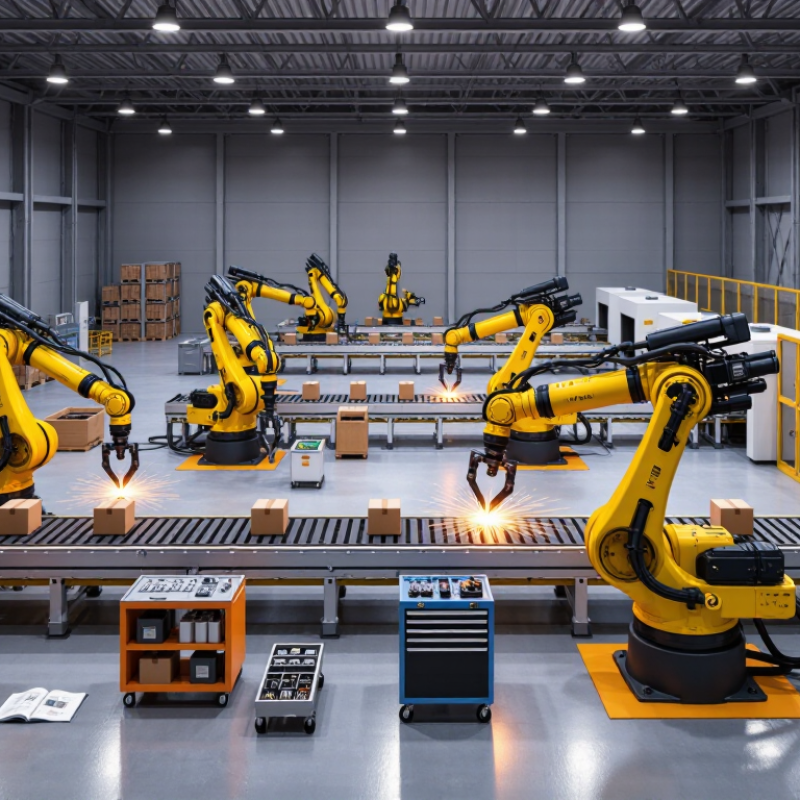
China has become a major sourcing destination for Industrial Robotics, serving factories across automotive, electronics, logistics, and metalworking. Its manufacturers offer robotic arms, welding systems, palletizing units, vision-guided machines, and complete production cells. However, a large catalog does not automatically prove engineering strength or dependable delivery.

This guide examines leading Chinese manufacturers and suppliers through practical buying criteria. It considers payload range, repeatability, cycle time, controller compatibility, safety design, and integration experience. It also reviews factory capabilities, quality systems, export records, technical documentation, and after-sales support. A reliable supplier should explain how its robot performs beside a conveyor, welding fixture, or packaging line. Clear drawings and test videos often reveal more than polished marketing language.

Details matter.

Buyers should request sample testing, maintenance schedules, spare-parts availability, and realistic commissioning timelines. Certifications can support trust, but they should be verified against the exact model and destination market. Customer references also deserve careful checking, especially for demanding environments involving dust, heat, vibration, or continuous operation. No supplier is perfect. Some companies excel at hardware but provide limited software support. Others offer strong integration while relying on external components. That weakness should be acknowledged rather than hidden. The following overview aims to help international buyers compare China’s Industrial Robotics manufacturers with greater confidence, practical judgment, and attention to long-term operating value.
China Best Industrial Robotics Manufacturers and Suppliers?

Understanding China’s Industrial Robotics Manufacturing Landscape

China’s industrial robotics manufacturing landscape combines deep supply chains, fast engineering cycles, and strong production experience. Manufacturers often source motors, servo drives, reducers, sensors, and control cabinets from nearby industrial clusters. This proximity can shorten development time and simplify replacement planning. It also creates quality differences between suppliers.

Many factories serve automotive, electronics, metalworking, logistics, and general assembly. Their robots may handle welding, palletizing, machine tending, painting, or precise component placement. In a factory visit, buyers should inspect cable routing, lubrication points, safety guarding, and controller access. Small details reveal practical engineering. A clean demonstration is not enough.

Experienced buyers usually request cycle-time data, repeatability records, maintenance schedules, and sample test results. They also check whether the supplier can train operators and support remote diagnostics. Documentation should match the delivered machine, including wiring diagrams and spare-parts lists. Compliance with recognized safety standards matters for international deployment. Yet the landscape is not perfectly uniform. Some suppliers have excellent hardware but limited software integration skills. Others provide flexible programming but inconsistent after-sales support. Pilot testing remains wise, especially when vision systems or changing product sizes are involved. Reality can differ. A production line may expose vibration, dust, heat, or awkward access that a showroom never shows. Careful factory audits and clear acceptance criteria reduce these surprises.

Key Types of Industrial Robots Produced in China

China’s industrial robotics manufacturers produce several robot types for different production demands. Articulated robots remain common in welding, painting, machine tending, and palletizing. Their multi-joint arms can reach around fixtures and handle changing work angles. However, programming quality often determines results more than payload figures.

SCARA robots suit fast assembly, screwdriving, and electronic component placement. They offer precise horizontal movement with a compact footprint. Delta robots work well for lightweight sorting and packaging, especially beside conveyor lines. Cartesian robots use linear axes for machining, dispensing, and large-format handling. Collaborative robots add force sensing and flexible deployment near trained workers. They can help smaller factories, though speed and payload may be limited.

China also supplies autonomous mobile robots for material movement between storage and production areas. Reliable suppliers usually provide installation guidance, safety documentation, spare parts, and remote diagnostics. During factory evaluations, buyers should inspect cycle-time tests, repeatability data, controller interfaces, and maintenance access. A polished demonstration can hide difficult integration work. No selection is perfect. Dust, vibration, uneven floors, and inconsistent parts may reduce performance after installation. A practical supplier discusses these weaknesses openly and recommends safeguards, operator training, and realistic acceptance testing.

Leading Manufacturers and Suppliers by Robot Category

China’s industrial robotics market spans articulated, SCARA, delta, Cartesian, and collaborative robots. Each category serves a different production problem.

Articulated robots handle welding, painting, palletizing, and heavy assembly.

SCARA models suit fast pick-and-place work, especially on compact electronics lines.

Delta robots excel when light products must move quickly.

Cartesian systems remain practical for simple, precise linear handling.

The International Federation of Robotics reported 541,302 industrial robot installations worldwide in 2023, with China accounting for more than half of new deployments. Its World Robotics 2024 report also recorded over 4.2 million robots operating globally. These figures show strong demand, but volume alone cannot identify the best manufacturer or supplier.

Buyers should examine payload stability, repeatability, cycle-time evidence, controller compatibility, and local service response. A robotic arm may look impressive in a showroom, then struggle beside dust, vibration, or uneven parts.

Collaborative robots require extra attention to safety validation and actual workstation limits. Their lower speed can reduce output in high-volume tasks.

Mobile robot suppliers should provide route-mapping data, battery-life tests, and recovery procedures.

Independent testing is valuable. So is a factory visit. Some supplier claims remain too optimistic, and published case studies may omit maintenance costs. Comparing three complete proposals, including integration, training, spare parts, and five-year operating expenses, usually reveals the more reliable choice.

How to Evaluate Chinese Robotics Manufacturers and Suppliers

Evaluating Chinese robotics manufacturers requires more than comparing catalog prices. Start by matching the supplier’s experience with your application, such as welding, palletizing, assembly, or machine tending. Ask for project references involving similar payloads, cycle times, and working environments. Review factory capacity, engineering staff, testing equipment, and production records. A polished website proves little.

Request detailed specifications for repeatability, reach, controller functions, safety systems, and software compatibility. Confirm whether critical components are produced internally or sourced externally. Examine quality documents, inspection procedures, and applicable safety certifications. Use video demonstrations carefully. Live testing is stronger. Ask the supplier to run your sample parts under measured conditions, not ideal showroom tasks.

Communication after delivery matters just as much as hardware. Check response times, spare-parts availability, training, remote support, and local service arrangements. A written warranty should define exclusions, repair duties, and expected downtime. Verify the legal requirements in your operating country with qualified professionals. Factory audits can reveal weak housekeeping, inconsistent labeling, or rushed final inspections. No evaluation is flawless. I would still keep a risk register and score suppliers against the same criteria. A low quotation may hide integration work, software limitations, or expensive replacement parts. Pilot orders reduce that uncertainty, although they require time and discipline.

China Best Industrial Robotics Manufacturers and Suppliers? - How to Evaluate Chinese Robotics Manufacturers and Suppliers

Evaluation Dimension Recommended Benchmark Why It Matters Documents or Evidence to Request Suggested Score Weight
Product Coverage At least two relevant robot categories, such as articulated, SCARA, delta, palletizing, welding, or collaborative robots. A broader product portfolio can simplify multi-station projects and future expansion. Product catalog, technical datasheets, application references, and product lifecycle information. 10%
Payload and Working Range The rated payload should exceed the actual tool-and-workpiece load by approximately 20–30%; reach should cover the complete work envelope without operating at the mechanical limit. Adequate capacity improves reliability, cycle consistency, and service life. Payload charts, reach diagrams, inertia limits, wrist-load specifications, and application calculations. 10%
Repeatability For many assembly and handling applications, a published pose repeatability of approximately ±0.02–±0.05 mm is commonly appropriate; verify the value under the applicable test method. Repeatability affects assembly accuracy, process stability, and product quality. Repeatability test reports, test conditions, payload settings, and calibration records. 10%
Cycle Time and Throughput Require a complete cycle-time study based on the actual motion path, payload, gripping method, safety conditions, and auxiliary equipment. Maximum speed advertised in a catalog may not represent production throughput. Simulation results, timed sample runs, takt-time calculations, and acceptance-test procedures. 10%
Controller and Software The controller should support the required programming method, remote diagnostics, recipe management, and industrial communication protocols. Software usability and connectivity influence commissioning time and integration cost. Programming manuals, software demonstration, API information, protocol list, backup procedures, and update policy. 10%
System Integration Capability Demonstrated ability to integrate vision, grippers, conveyors, safety circuits, PLCs, welding equipment, or other application-specific devices. Successful integration reduces the risk of delays between the robot, tooling, and production line. Reference projects, electrical drawings, risk assessments, integration scope, and commissioning plan. 10%
Safety and Compliance The complete cell should be designed according to applicable machinery-safety requirements, including risk assessment, guarding, emergency stops, and safe operating modes. Robot compliance depends on the complete application, not only the robot arm. Declaration of conformity where applicable, electrical certification, safety-function documentation, risk assessment, and user manual. 10%
Quality Management A documented quality system, preferably certified to ISO 9001, with traceability for critical components and final inspection. Controlled manufacturing processes help reduce variation and early-life failures. Valid certificate, production-control procedures, inspection records, nonconformance process, and factory-audit results. 10%
Reliability and Testing Verify endurance testing, thermal testing, calibration control, failure reporting, and availability targets relevant to the application. Reliability directly affects downtime, maintenance cost, and production output. Factory-acceptance-test records, mean-time data where available, preventive-maintenance schedule, and spare-parts list. 10%
After-Sales Service Defined response times, remote technical support, local service capability, training, commissioning assistance, and spare-parts availability. Support quality is essential when the production line is operating across time zones or outside China. Service-level agreement, escalation process, support hours, training plan, warranty terms, and spare-parts lead times. 10%
Delivery and Project Management The supplier should provide a detailed schedule covering design approval, manufacturing, testing, shipment, installation, training, and final acceptance. Clear project control helps manage international logistics and installation risks. Project plan, milestone list, packing specifications, export documents, installation requirements, and acceptance criteria. 5%
Total Cost of Ownership Compare robot, controller, tooling, vision, safety equipment, integration, shipping, installation, training, maintenance, energy, and spare-parts costs. The lowest purchase price may not provide the lowest cost per part over the equipment life. Itemized quotation, warranty exclusions, maintenance rates, consumables list, energy data, and five-year cost projection. 5%

Note: The benchmarks above are general industry evaluation references. Actual requirements should be confirmed through application testing, contractual specifications, applicable local regulations, and documented factory-acceptance procedures.

Purchasing, Certification, Installation, and After-Sales Support

Choosing an industrial robotics supplier in China requires more than comparing catalog prices. A reliable evaluation covers engineering experience, certification records, installation planning, and long-term support. Ask for application references, cycle-time data, payload calculations, and factory acceptance procedures. Documentation matters.

Purchasing teams should verify the robot’s working envelope, repeatability, controller compatibility, safety functions, and spare-parts availability. Certificates must match the actual model and destination market. Request test reports, electrical drawings, risk assessments, and operator manuals before signing. A low quotation may exclude grippers, vision systems, training, or commissioning travel. That gap can become expensive.

Installation should include floor checks, cable routing, guarded zones, programming, and trial production with real materials. Skilled technicians should train operators and maintenance staff beside the production line. After-sales support needs clear response times, remote diagnostics, replacement-part lead times, and escalation contacts. Practical support is measurable.

No project is perfectly smooth. Communication delays, incomplete drawings, or changing product dimensions can affect commissioning. A dependable supplier records these issues and updates the action list instead of hiding them. Buyers should also inspect packaging, arrival damage, software backups, and maintenance logs. Small details matter. When technical evidence, transparent pricing, and responsive service align, the supplier becomes easier to trust.